
You know the feeling. You had a great session, caught a few waves, something clicked. But by the time you paddle out again, it's gone. You're back to square one, making the same mistakes, wondering why nothing sticks.
The truth is, most surfers plateau not because they lack talent or waves. They plateau because they have no feedback system between sessions. You pick up something on Saturday, forget it by Wednesday, and start over next weekend. Progress stalls.
Here are five things you can do between sessions that will actually move the needle. No waves required.
1. Film Yourself (Even If It Feels Awkward)
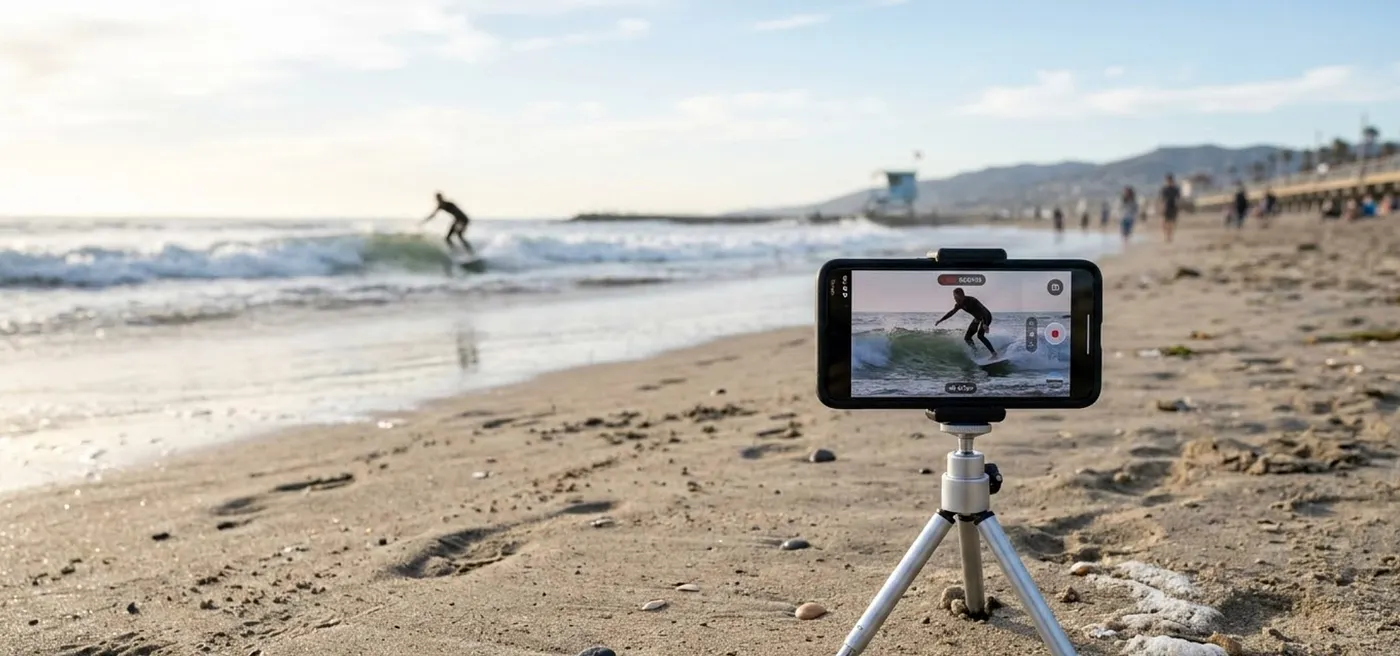
This is the single highest-impact thing you can do, and almost nobody does it consistently.
When you're on the wave, your brain is in survival mode. You think you're crouching low, but the video tells a different story: stiff legs, arms flailing, eyes glued to the board.
How to do it:
- Ask a friend on the beach to film with a phone (zoomed in, landscape mode)
- If you're solo, a GoPro on a tripod at chest height works great
- You only need 5–15 seconds per wave. Don't worry about filming the whole session
- Film from the side or slightly angled. This shows body position best
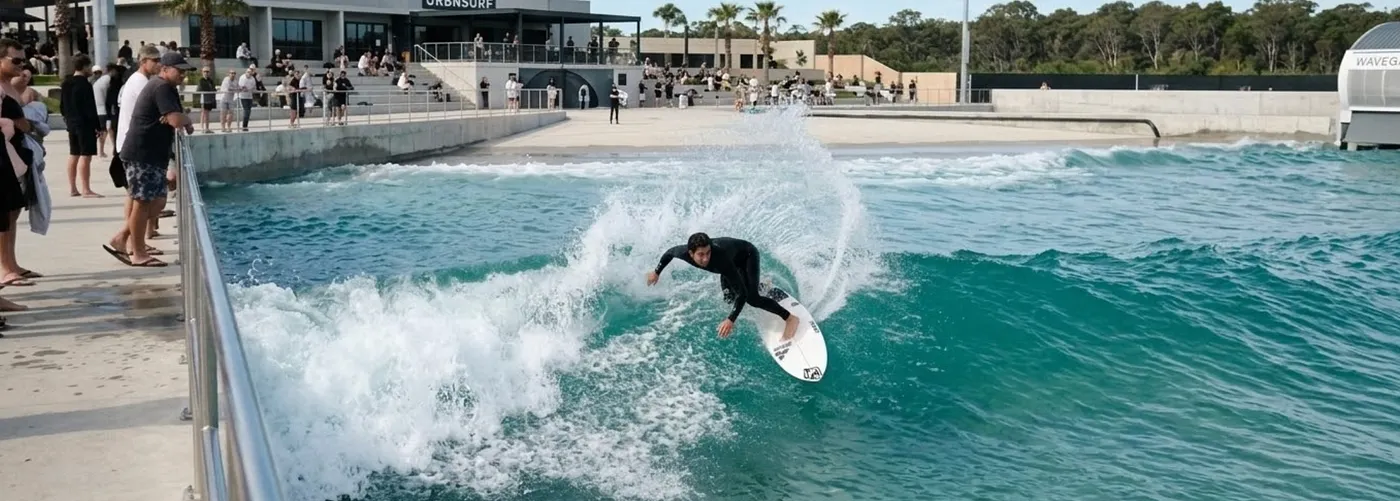
- Surfing at a wave pool? You're in luck. Most wave parks have camera systems that capture every wave, and you can purchase the footage after your session. Consistent waves + consistent camera angle = the cleanest footage you'll ever get for self-review
What to look for:
- Where are your eyes during the pop-up? (They should be looking where you want to go, not down at the board)
- How low is your center of gravity? (Lower than you think it should be)
- Where are your hands when you stand? (Hint: they shouldn't be grabbing the rails)
You'll be shocked at the gap between what it feels like and what it looks like. That gap is where your improvement lives.
Pro tip: Don't just watch and forget. Pick ONE thing you see in the footage and make it your single focus for the next session. One thing. Not five.
2. Do the Pop-Up on Land (But Do It Right)
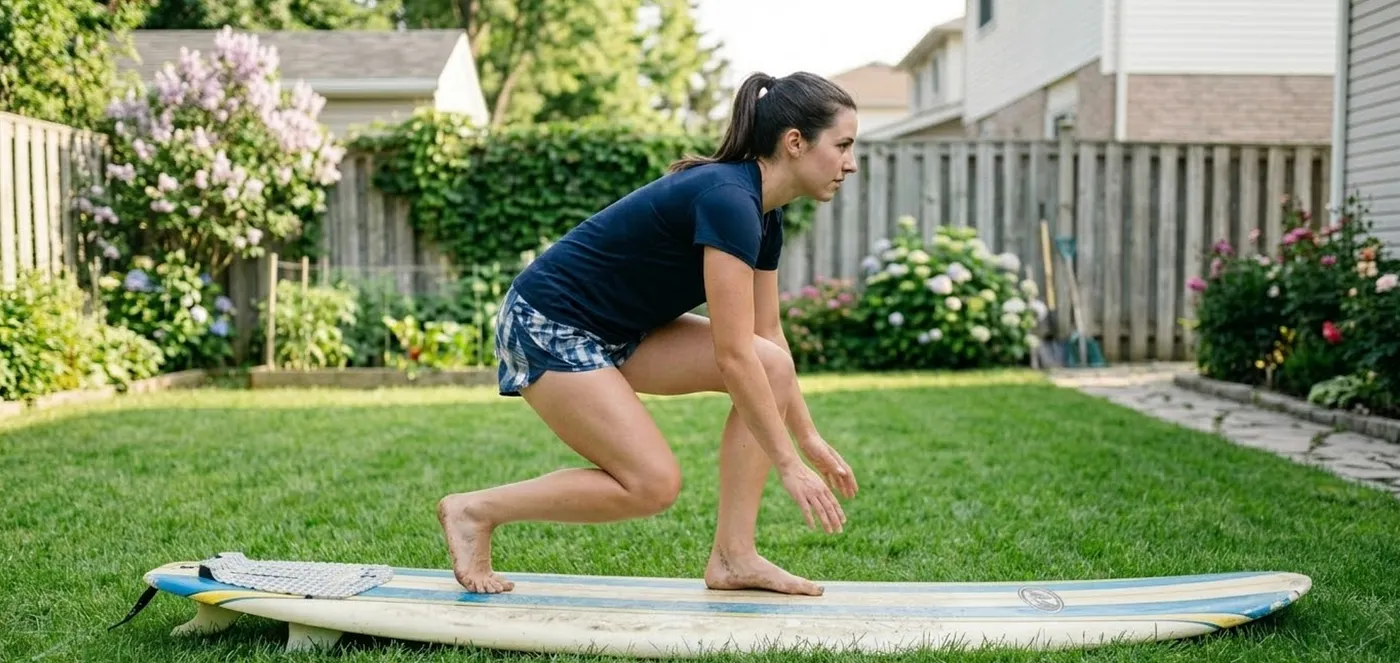
Yes, you've heard "practice your pop-up at home." Everyone says it, nobody does it well.
The common mistake is practicing speed. Surfers do rapid-fire pop-ups on their living room floor and think they're training. But speed without accuracy just reinforces bad mechanics.
You don't need a board to practice. A yoga mat or even a bath towel works great. Just lay it down and use it as your "board." The mat gives you a defined space to land on, and you can mark your ideal foot placement with tape. A towel on a hard floor adds a bit of slide, which actually forces you to be more precise with your movements.
The right way:
- Lie flat, hands by your chest (not your stomach, not your shoulders. Your chest)
- Push up and bring your feet under you in ONE motion
- Land with your front foot between your hands and your back foot perpendicular near the tail
- Freeze. Check your position. Are your knees bent? Is your weight centered? Are your eyes forward?
Do 10 reps slowly, pausing at the top of each one. Film yourself doing it. Compare your foot placement to where it should be.
Quality reps build muscle memory. Sloppy speed reps build sloppy habits.
3. Watch Surf Footage With a Coach's Eye
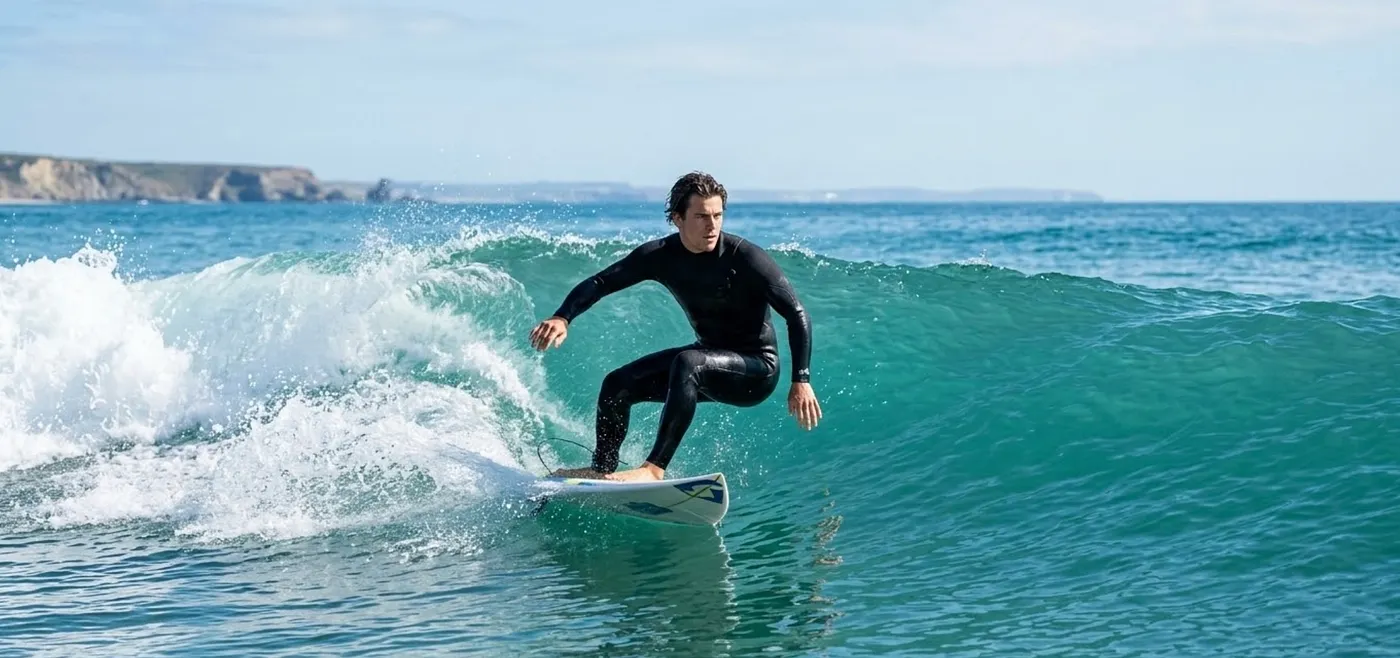
Most of us watch surf videos the way we watch action movies: for the spectacle. Big turns, barrels, airs. It's entertainment.
Switch your mindset: watch for mechanics.
Pick a surfer at your aspiration level. Not John John Florence doing full rotations, but a solid intermediate surfer doing clean bottom turns and cutbacks. Watch in slow motion and pay attention to:
- Their head. It always moves first. Where the head goes, the body follows
- Their hands. Relaxed but deliberate, leading the rotation
- Their knees. Always compressed. Always. More than you think
- Their weight distribution. How they shift between front and back foot through the turn
Then compare it to your own footage from tip #1. The differences become obvious and specific. Not vague "surf better" advice, but "my back arm is dragging behind instead of leading the turn."
Good YouTube channels for this: Surf Simply's technique breakdowns, Kale Brock, Barefoot Surf, and OMBE Surf. They slow things down and explain the why.
4. Review Your Sessions With Structured Feedback
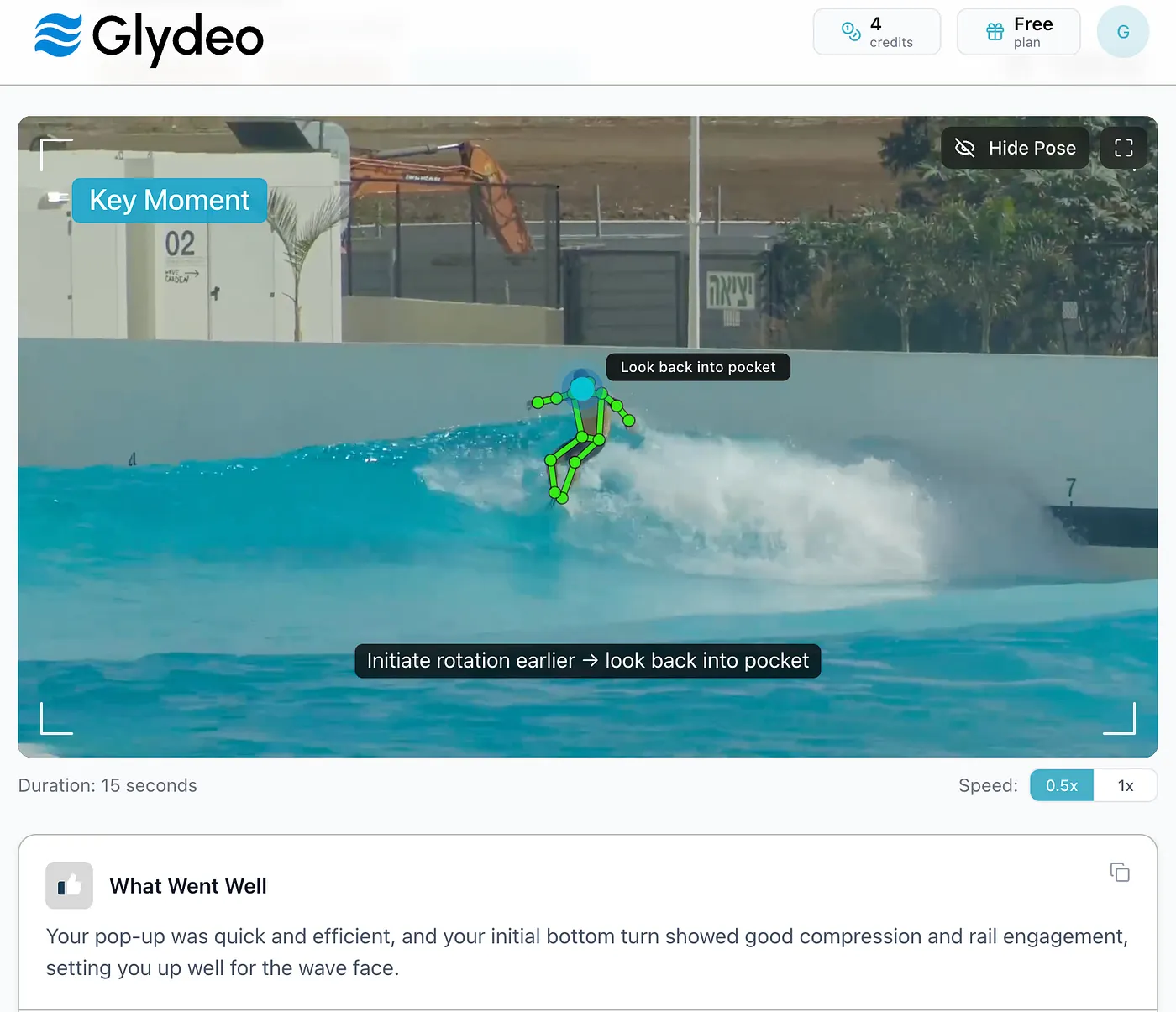
Here's where most self-taught surfers get stuck: you film yourself, you see something looks off, but you don't know why it's happening or how to fix it.
Knowing your pop-up is slow isn't useful. Knowing it's slow because your hands are placed too low, which forces a two-stage push-up instead of a single explosive motion? That's useful. That's something you can fix tomorrow.
This is what coaches do well: they don't just identify the problem, they diagnose the root cause and give you a drill to fix it.
If you don't have regular access to a coach, look for tools that replicate this feedback loop. There are AI-powered coaching apps now, like Glydeo, where you upload a short clip and get a structured breakdown: what went wrong, why it happened, and exactly how to fix it. It's not a replacement for an in-person coach, but it fills the gap between sessions when you'd otherwise be guessing.
This works especially well with wave pool footage. Since the wave is identical every time, the only variable is you. That makes it dead simple to spot what changed between attempts and whether your adjustments are actually working.
The key principle is this: unstructured video review reinforces confusion. Structured feedback drives improvement.
Whatever method you use (coach, app, or knowledgeable friend), make sure you walk away from each review with a single, specific focus for your next session.
5. Build a Session Journal (Keep It Stupid Simple)
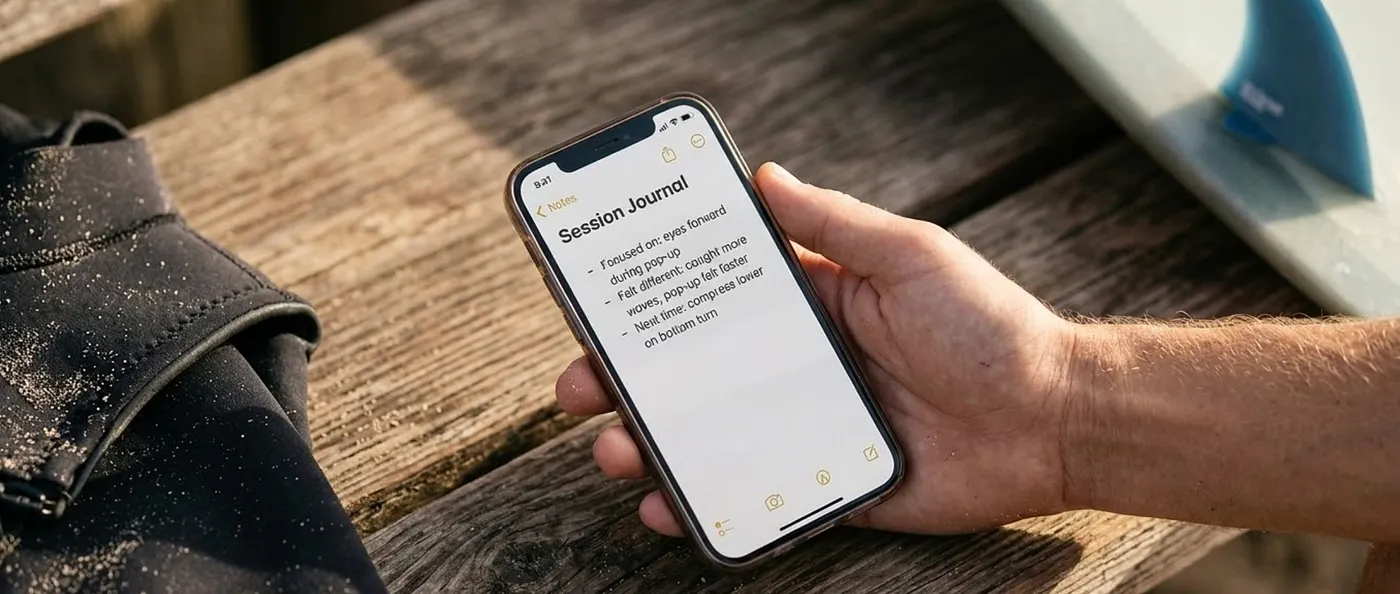
This sounds overkill. It's not. It takes 2 minutes.
After each session, write down three things:
- What I focused on (e.g., "keeping eyes forward during pop-up")
- What felt different (e.g., "caught two more waves than usual, pop-up felt faster")
- What to focus on next time (e.g., "compress lower on bottom turn")
That's it. Phone notes app, back of a napkin, whatever.
Here's why this matters: surfing is a feel sport. You lose the nuance of a session within 24 hours. Two weeks later, you remember nothing except "it was fun" or "it was frustrating."
A journal creates continuity between sessions. You show up to your next session with a plan instead of winging it. Over a month, you'll see patterns — recurring issues, breakthroughs, conditions that help you surf better.
If you're using a coaching app like Glydeo, this happens automatically. Every clip you upload builds your progression history, and the feedback adapts based on what you've been working on. It's like having a personal coach who remembers every session and knows exactly where you left off.
The surfers who progress fastest aren't the ones with the most talent. They're the ones with the shortest feedback loop.
The Common Thread
Notice what connects all five tips: feedback.
Filming gives you visual feedback. Land practice gives you body feedback. Watching pros gives you comparison feedback. Structured review gives you coaching feedback. Journaling gives you progress feedback.
Surfing progression isn't about more hours in the water. It's about closing the gap between what you think you're doing and what you're actually doing, then making one small adjustment at a time.
Start with one tip this week. Film your next session. Watch it back. Pick one thing. That's your homework.
You'll be surprised how fast things start clicking.
Glydeo is an AI-powered coaching app that analyzes your surf, snowboard, and ski videos to give you personalized technique feedback. Try it free.